Case study
The gift that became a verb. The BuyMe story.
 Jason FranciscoAugust 20, 2022
There is a moment in the life of every truly successful brand when it stops being a product and becomes a word. When people don't say "get them a gift card." They say "get them a BuyMe."
That moment doesn't happen by accident. It happens when the brand finds the exact right place in people's lives and owns it so completely that language follows.
For BuyMe, that place was the space between.
The insight that changed everything
Gift-giving has always lived in tension. On one end: cash. Practical, useful, completely impersonal. The gift that says "I didn't know what to get you" more loudly than any card ever could. On the other end: the perfectly chosen personal gift. The one that takes real knowledge of the person, real time, real effort, and still carries the risk of getting it completely wrong.
Most people spend their gifting lives somewhere in the middle, uncomfortable on both sides. They don't want to give cash. But they're not sure enough about the personal gift. So they default to something safe, something generic, something forgettable.
That tension was BuyMe's opportunity.
Not a gift card in the cold, corporate, here's-a-voucher-from-the-HR-department sense. Something warmer than cash, more flexible than a specific gift, and more personal than anything a generic gift card could ever feel. The sweet spot between practical and personal. Between ease and meaning. Between "I thought about you" and "you choose."
Once we found that insight, the whole brand could be built around it.
Not a gift card. A gift.
The first and most important strategic decision was refusing the category.
Gift cards, as a category, had a problem. They felt transactional. Corporate. The kind of thing you give when you've run out of ideas or time. To position BuyMe as a gift card was to inherit all of that baggage before the conversation even started.
So we didn't.
BuyMe wasn't a gift card. BuyMe was a gift. A new kind of gift, one that gave the recipient the joy of choosing while still carrying the intention and warmth of something given by someone who cared. The brand's job wasn't to explain a product. It was to redefine what giving looked like.
That repositioning changed everything: the tone, the visual world, the character of the brand, and most importantly, the emotional territory BuyMe could claim.
The brand didn't just enter the culture. It changed how people talk about giving.
The pelican who delivers joy
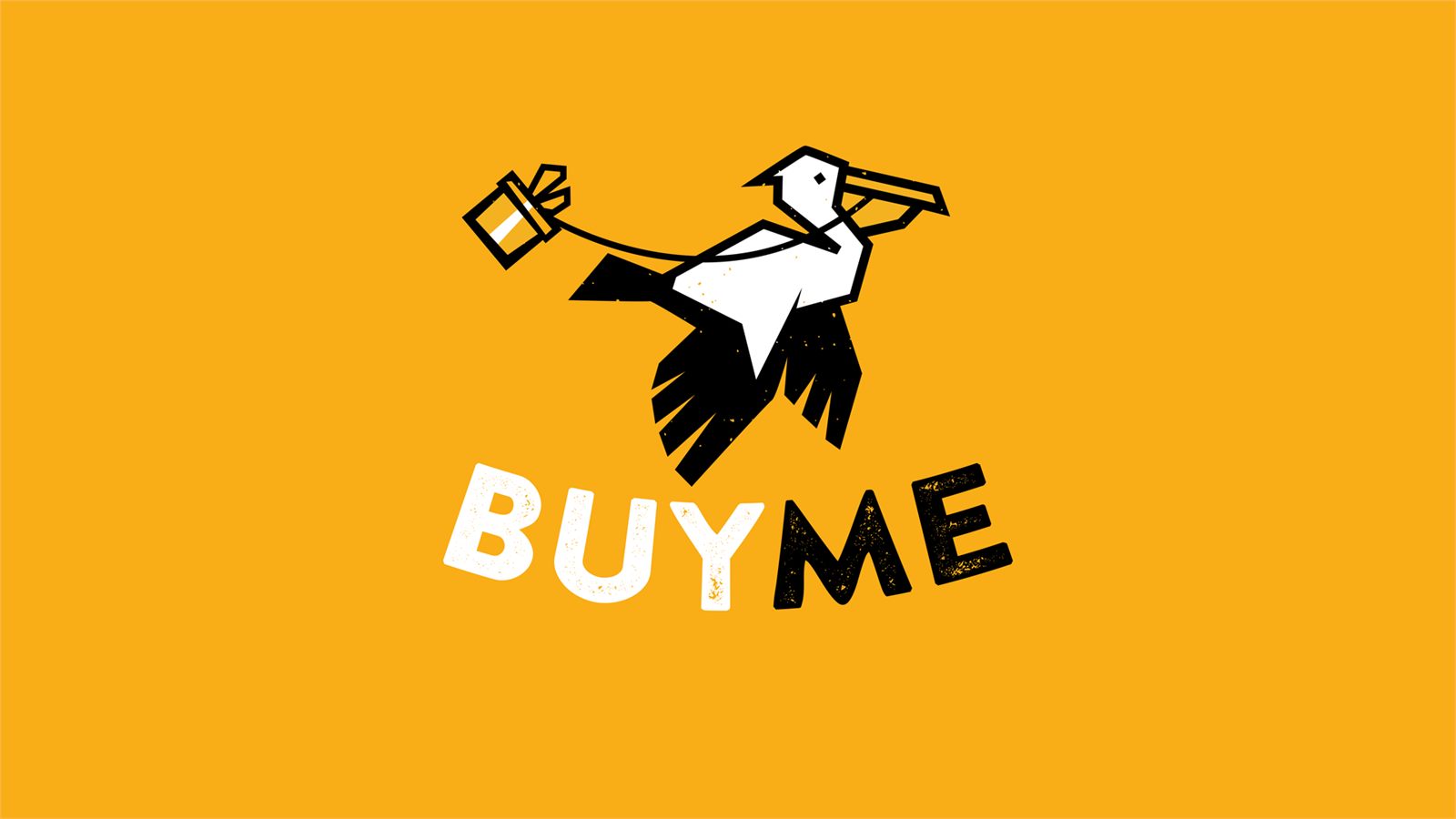
A gift card brand could have a logo. BuyMe needed a character.
The gift pelican became one of the most recognizable brand icons in Israel: warm, slightly absurd, immediately lovable, and completely synonymous with the feeling of giving and receiving something that makes you smile. Not a corporate symbol. A friend. The kind of character that shows up at the door with a gift and leaves everyone a little happier than before.
The pelican did something that no tagline or product description could: it gave BuyMe an emotional signature. You didn't just see the pelican and think "gift card." You felt something. And in a category that was fighting to escape the gravitational pull of transactional, that feeling was everything.
When a brand becomes a noun
There is a specific kind of brand success that linguists call genericization. It's when a brand name becomes so dominant in its category that people use it as the word for the thing itself. Kleenex for tissues. Google for searching. BuyMe for gifting.
In Israel today, people don't say "I'll send you a digital gift." They say "I'll send you a BuyMe." Parents tell their kids they got them a BuyMe. Friends send BuyMes for birthdays, for congratulations, for "I was thinking of you." The brand didn't just enter the culture. It changed how people talk about giving.
That's not marketing. That's brand strategy working exactly as it should: so clearly, so completely, and so humanly that the market adopts it as its own.
What made it work
The BuyMe story is, at its heart, a story about finding the right territory and owning it completely before anyone else could.
The sweet spot between cash and personal was always there. It existed in the tension every gift-giver felt every time a birthday came around. BuyMe didn't create that tension. It named it, resolved it, and gave people a better option, wrapped in a brand warm enough to make giving feel like an act of care rather than an act of commerce.
The pelican, the warmth, the refusal to be a gift card: all of it came from a single strategic truth. People love giving. People love receiving. The brand's job was to make both easier, more joyful, and more human.
In a few short years, BuyMe became one of the most recognized brands in Israel. Not because it outspent the competition. Because it out-storyed them.